AI-Powered Predictive Maintenance
Ecosystem for the 2030 Jeep Gladiator
Stellantis x University of Michigan Sponsor Project
Henry Parker
Sophie Liu
(4 months)
Interaction design
AR/mobile prototyping
Design systems
Stakeholder communication
Overview
Stellantis asked us to explore how AI could prevent breakdowns before they happen, giving us the freedom to choose which vehicle to design around. My team chose the Jeep Gladiator for its well-documented maintenance issues and its adventurous, self-reliant audience, a combination that made the problem worth solving. We designed a three-part ecosystem: an in-car widget display, a companion app, and an AI-powered AR scanner, built to move drivers from awareness to understanding to action.
Design Challenge
How might we create a seamless 2030 Jeep Gladiator ecosystem that predicts issues, educates drivers, and makes taking action effortless?
Research + Opportunity
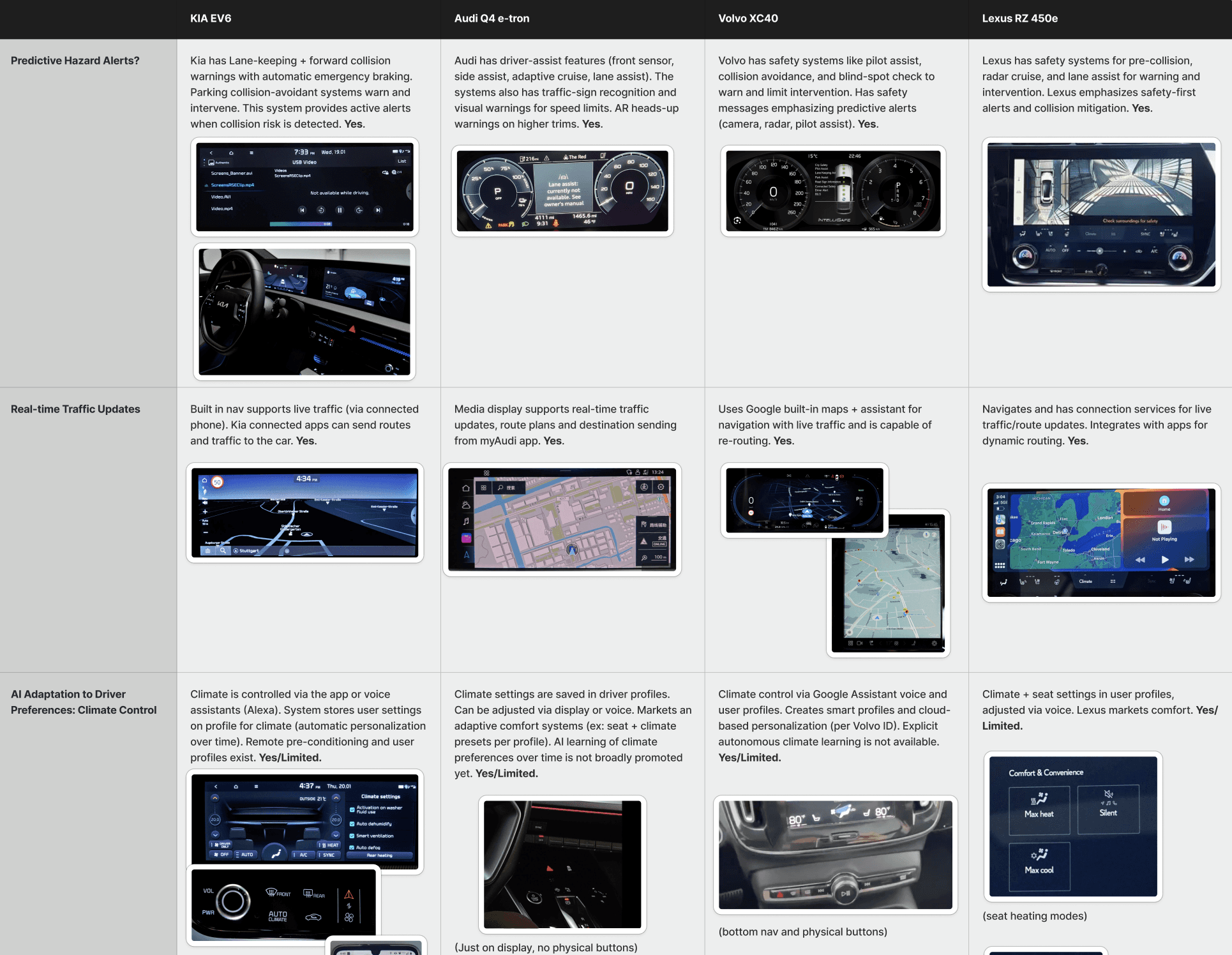
Over two months, I familiarized myself with in-cabin displays, car interfaces, and gaps in the market. In this process, I found outdated features and areas for opportunity. A competitive audit of existing predictive maintenance (GM's OnStar and Ford's maintenance system) led to a decisive finding: no competitor design empowered drivers to maintain their own vehicle. In fact, the DIY auto repair market has grown nearly 6% annually since 2020, and drivers who self-repair save an average of $3,993 a year. This is what led directly to JeepView.

Getting Hands-on
After creating an initial mockup, our team tested with fellow classmates and the Stellantis UX team to receive direct feedback.
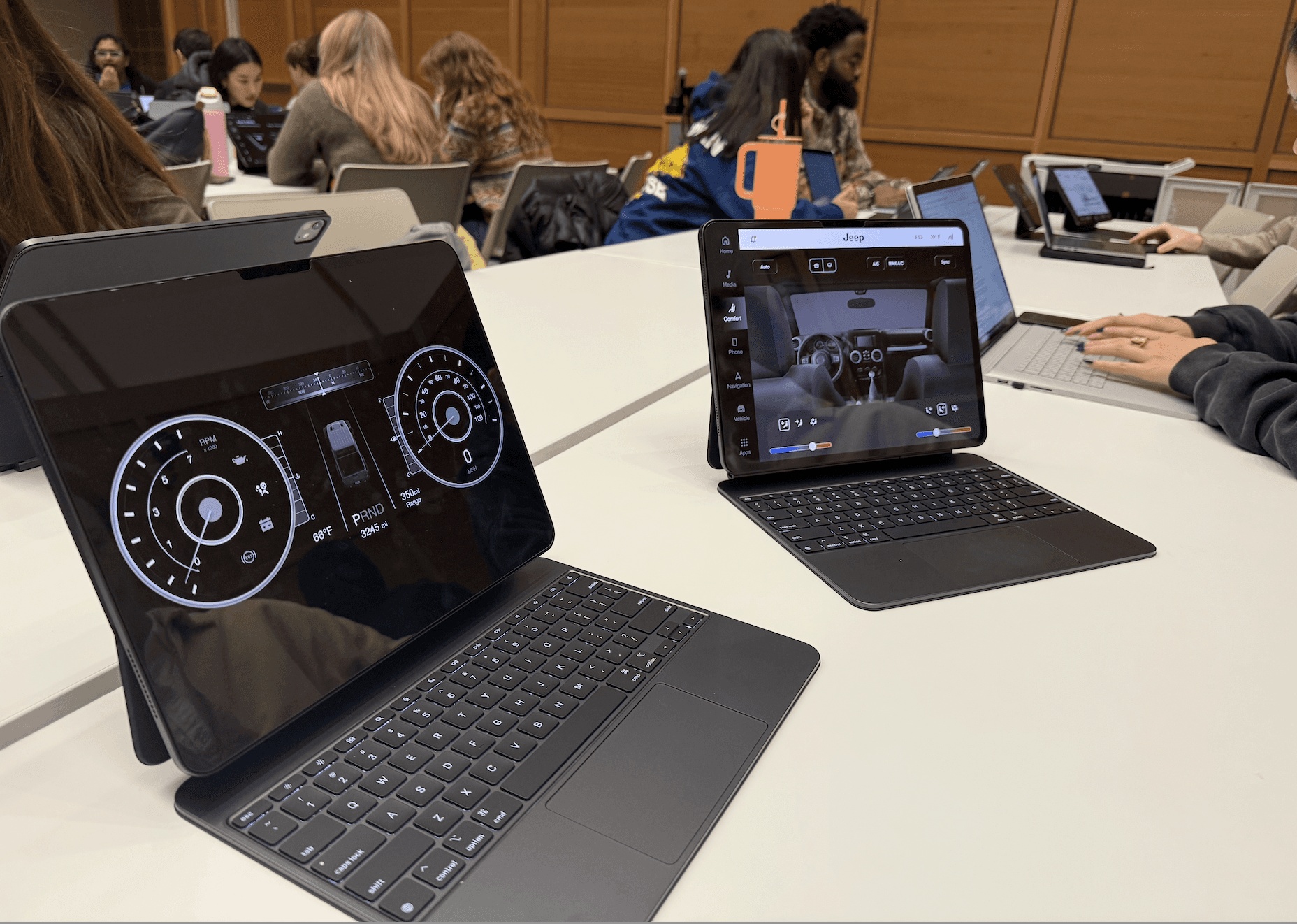

Feedback
- Privacy concern in usability testing.
A participant said seeing low car health on a persistent home screen felt embarrassing in front of passengers, a privacy issue I hadn't considered. - Stakeholder pushback on visibility.
Our Stellantis UX lead pointed out that a constant maintenance display would just get tuned out, since drivers mainly navigate and listen to music. - Redesigned around both insights.
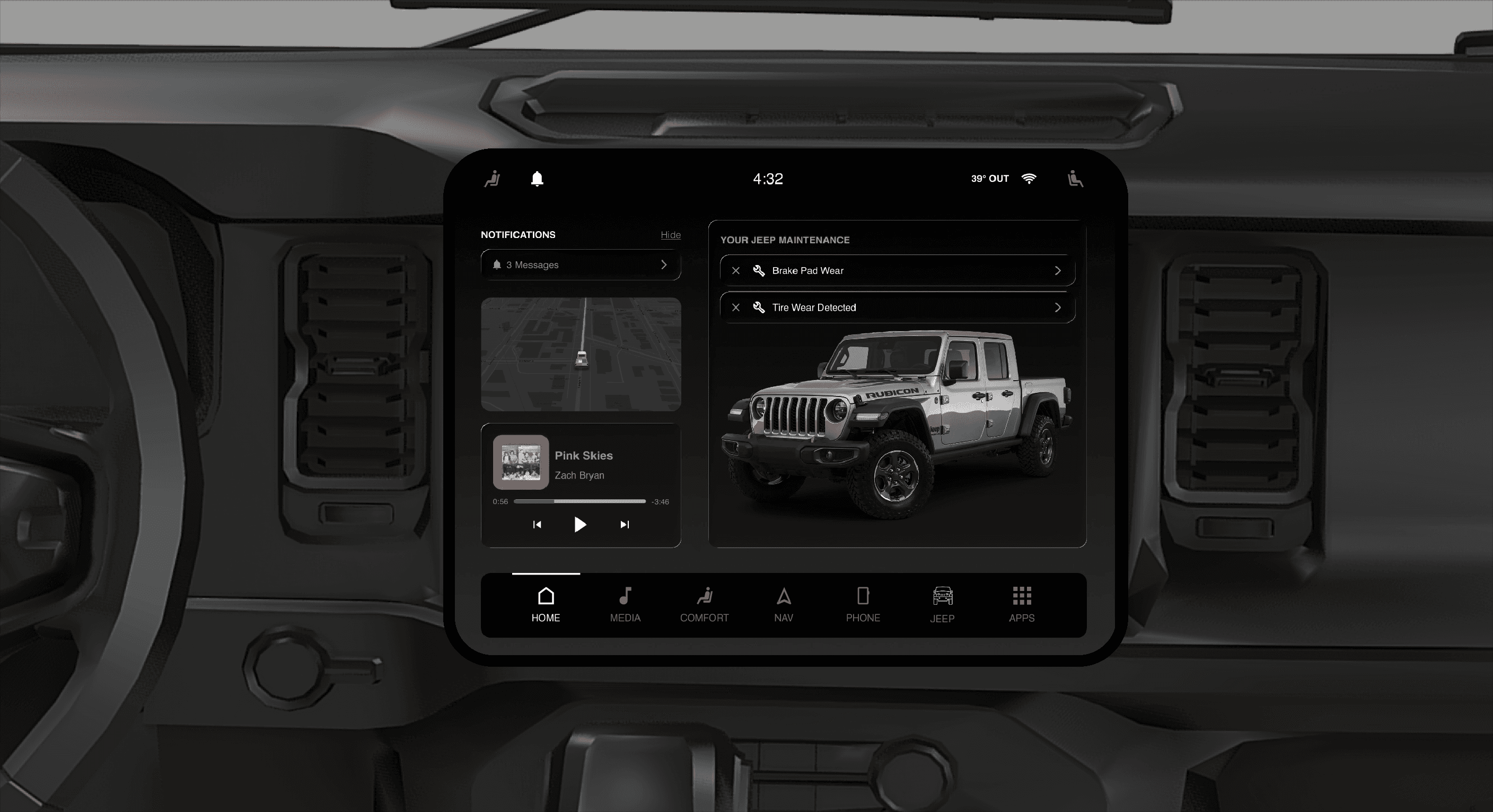
We killed the original always-on widget and made it scrollable and opt-in instead, shaping the quieter system we shipped.
Our Solution
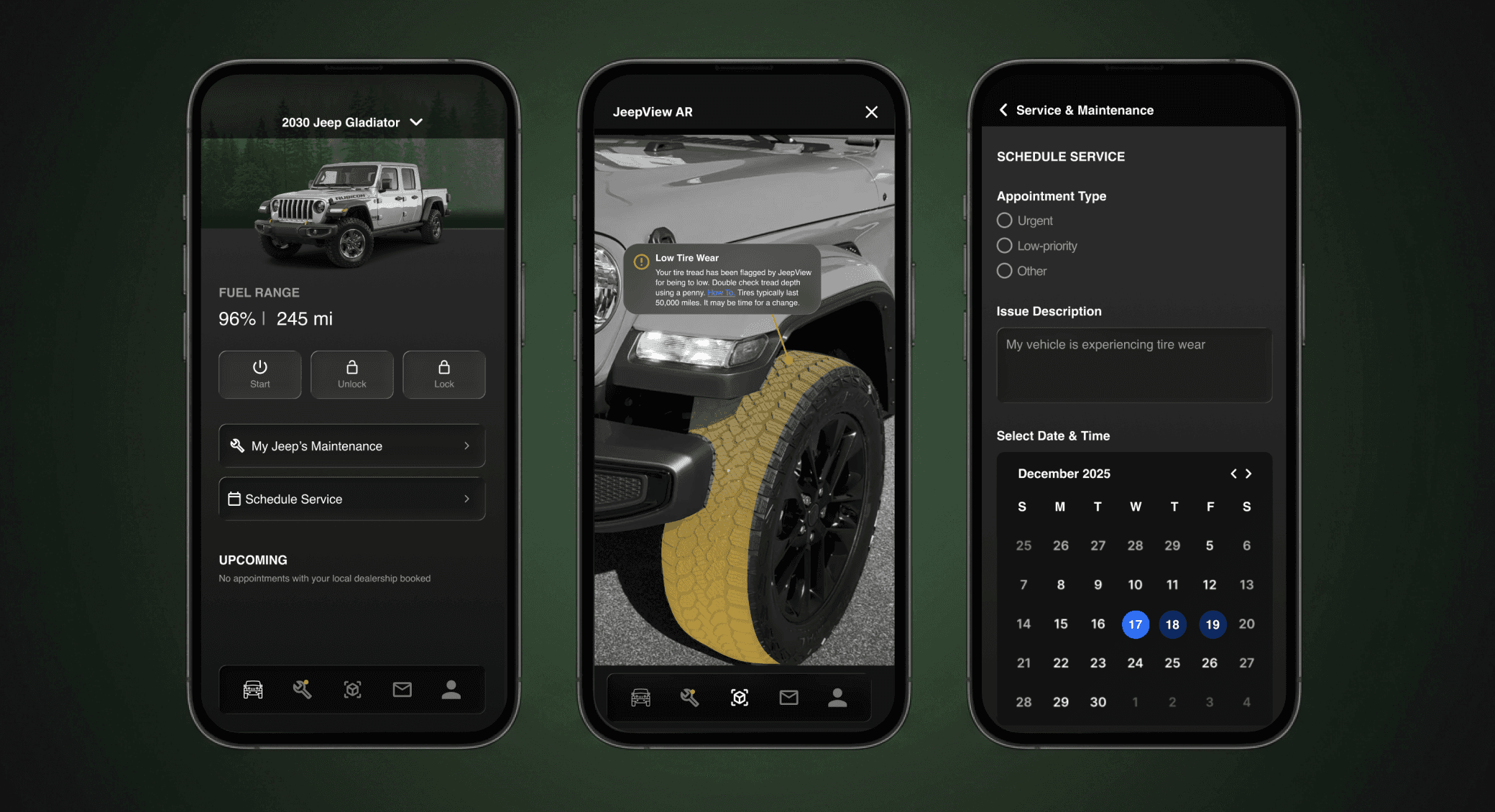
The ecosystem has three main features.
A swipeable, opt-in widget showing vehicle health by severity, surfaced only during safe moments.
JeepView, an AR scanner (my focus) that identifies vehicle parts, flags issues, and serves repair videos.
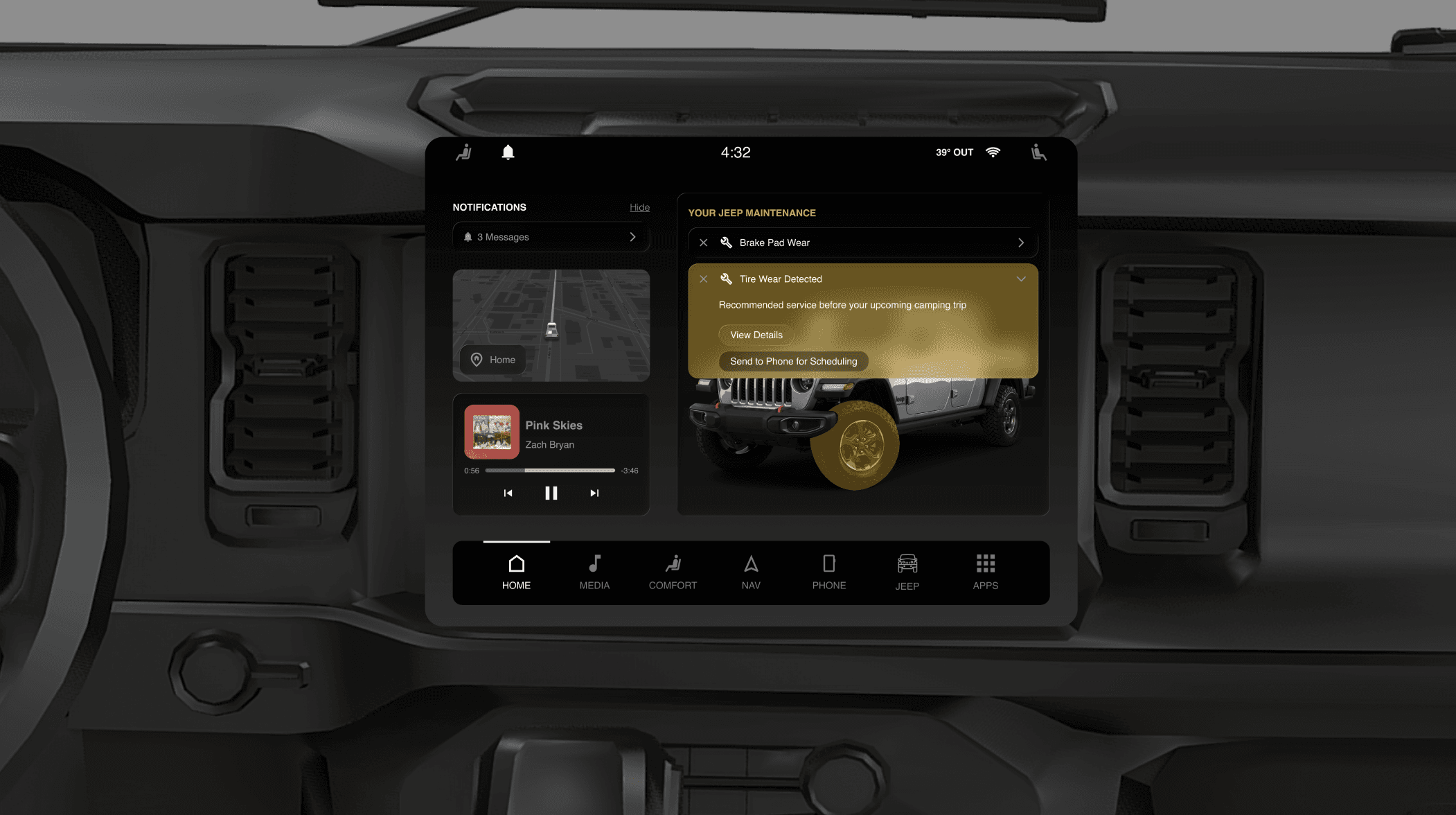
Integrated scheduling that syncs service windows to the driver's calendar.
Learning Outcomes
- Set aside my own taste.
I love performance cars, and the Gladiator isn't one, so I had to focus on understanding the perspective of the people who actually drive it. - Next step: real-world testing.
I'd run driver simulations to test AI recommendation timing under live conditions. - Next step: community layer.
I'd explore a feature where drivers share DIY knowledge with each other.